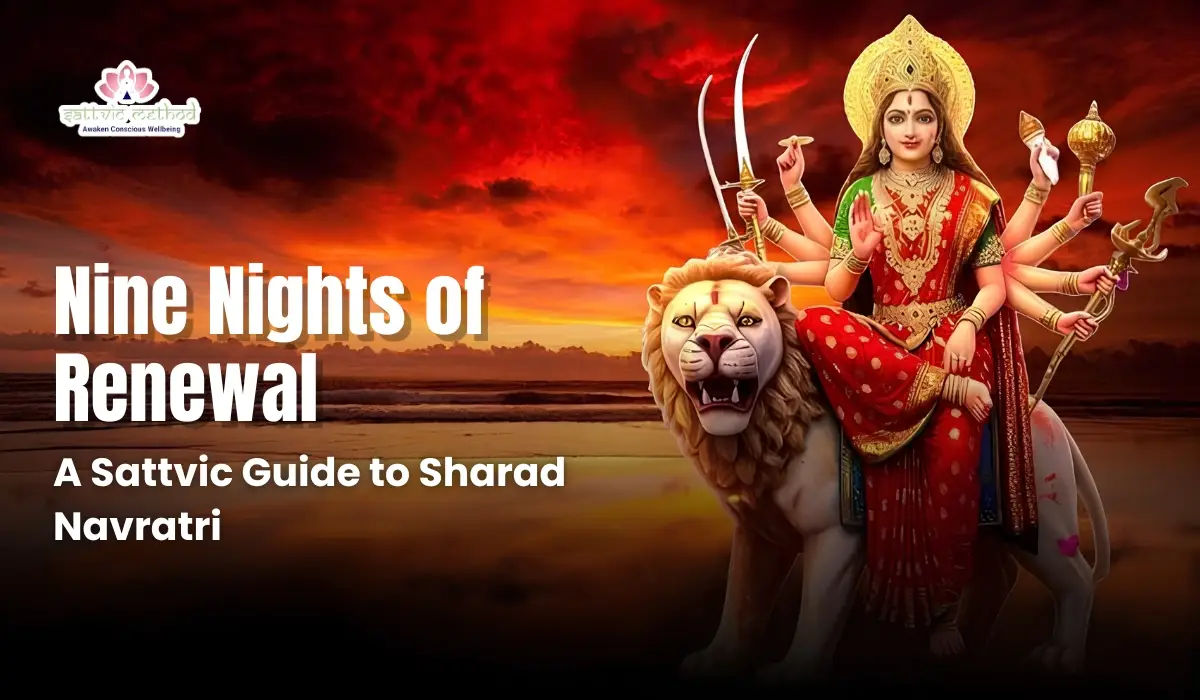
Nine Nights of Renewal: A Sattvic Guide to Sharad Navratri
Sharad Navratri begins on October 11, 2026, marking nine sacred nights dedicated to the Divine Mother and her many forms.
Navratri is a time for prayer, reflection, devotion, community, and inner renewal. Many people observe the festival through fasting, meditation, mantra chanting, temple visits, devotional music, and mindful food choices.
At its heart, Sharad Navratri invites us to create more space for clarity, discipline, courage, compassion, and spiritual awareness.
What is Sharad Navratri?
Sharad Navratri is the autumn Navratri festival traditionally observed over nine nights and ten days. It honors the divine feminine energy represented through forms of Devi, including Durga, Lakshmi, and Saraswati.
Different regions celebrate Navratri in different ways. Some communities organize Garba and Dandiya, while others focus on Durga Puja, fasting, devotional singing, meditation, or daily temple worship.
The traditions may vary, but the central themes remain connected to devotion, strength, transformation, and the victory of dharma over negative forces.
When Does Sharad Navratri Begin in 2026?
According to a local Hindu festival calendar, Sharad Navratri begins on Sunday, October 11, 2026. For the exact date and Ghatasthapana timing, consult the Drik Panchang Navratri Calendar.. The festival continues through the Navratri period, leading to Durga Ashtami, Maha Navami, and Vijayadashami or Dussehra.
Because Hindu festival dates and puja timings depend on location, sunrise, sunset, and regional panchang calculations, families should confirm the exact timing with their local temple or calendar.
The Spiritual Meaning of Navratri
Navratri is often understood as a journey of inner transformation.
To deepen your understanding of Navratri’s stories and spiritual meaning, explore our Navaratri Katha and connect with the wisdom behind the festival.
The nine nights can become an opportunity to:
- Release habits that no longer serve you
- Strengthen your spiritual discipline
- Spend more time in prayer
- Practice mindful eating
- Develop patience and courage
- Reconnect with family traditions
- Create a calmer home environment
- Reflect on your personal values
Sattvic Navratri Practices
A Sattvic approach to Navratri emphasizes purity, awareness, balance, and conscious living.
You may choose to include:
You may choose to include:
Meditation
Begin or end the day with a quiet meditation. Focus on the breath, a mantra, or a devotional image.
Mantra and Prayer
Chant a prayer or mantra that is meaningful to your tradition. Consistency and sincerity are more important than duration.
Conscious Breathing
Simple pranayama or mindful breathing can help create a peaceful transition between daily activity and spiritual practice.
Clean and Peaceful Surroundings
Cleaning your prayer space, preparing fresh flowers, lighting a diya safely, and keeping the home peaceful can support a devotional atmosphere.
Mindful Speech
Navratri can also be a time to observe how we speak. Choose words that are truthful, compassionate, and constructive.
Sattvic Food During Navratri
Many people follow a special fasting or festival diet during Navratri. Practices differ widely, so it is important to follow your family or regional tradition.
Common Sattvic food choices may include: The nine nights can become an opportunity to:
Common Sattvic food choices may include: The nine nights can become an opportunity to:
- Fresh fruits
- Coconut
- Milk or suitable alternatives
- Nuts and seeds
- Potatoes and sweet potatoes
- Sabudana
- Samak rice
- Singhara flour
- Pumpkin
- Cucumber
- Homemade yogurt, when suitable
- Freshly prepared vegetable dishes
A simple Navratri meal may include samak rice, roasted vegetables, yogurt, fruit, and a small portion of nuts or seeds.
For a simple and balanced approach to mindful eating during Navratri, explore this Sattvic meal plan.
If you are pregnant, managing a health condition, taking medication, or following a medically required diet, consult a qualified healthcare professional before fasting or making major dietary changes.
Naivedhyam During Navratri
Naivedhyam, also known as Naivedya, is food prepared and offered to the Divine before being shared as prasad. Common offerings include fresh fruits, coconut, dry fruits, makhana, sabudana khichdi, samak rice, kheer, halwa, and other traditional Sattvic foods. Prepare the offering with fresh ingredients, cleanliness, gratitude, and devotion, while following your family or regional traditions.
A Simple Navratri Meal Plan
Morning
Warm water, fresh fruit, or a light Sattvic healing smoothie.
Breakfast
Fruit with soaked nuts, a light sabudana dish, or a suitable traditional Navratri meal.
Lunch
Samak rice, seasonal vegetables, yogurt, and a fresh salad.
Evening
Coconut water, fruit, or roasted makhana.
Dinner
A light soup, roasted vegetables, or a simple fasting meal prepared according to your tradition.
The goal is not to overeat festival foods after fasting. Eat slowly, stay hydrated, and pay attention to your body.
Navratri and the Three Gunas
In Indian philosophy, the three gunas—sattva, rajas, and tamas—describe different qualities of energy and experience.
- Sattva represents clarity, balance, harmony, and awareness.
- Rajas is associated with activity, movement, and restlessness.
- Tamas is associated with heaviness, inactivity, and inertia.
Navratri can be used as a time to cultivate more Sattva through peaceful routines, fresh food, spiritual study, meditation, gratitude, and mindful relationships.
You can also explore an Ultimate Gunas Quiz as a reflective tool for understanding your current habits and tendencies.
Family-Friendly Navratri Activities
Navratri can be a meaningful experience for children and families.
Consider:
Consider:
- Telling stories of Devi
- Creating a simple festival coloring activity
- Preparing a traditional Sattvic recipe together
- Learning a devotional song
- Decorating a prayer space
- Visiting a temple or community celebration
- Writing down one quality each family member wants to develop
- Practicing one act of kindness each day
These activities help children understand that festivals are not only about food and decorations. They are also about values, connection, and gratitude.
Navratri Reflection Questions
During the nine nights, reflect on these questions:
- What do I want to release?
- Where can I practice more courage?
- What does strength mean to me?
- How can I bring more peace into my home?
- Which daily habit supports my wellbeing?
- Where do I need greater compassion?
- What am I grateful for?
- What knowledge or wisdom do I want to develop?
- How can I live with greater awareness?
Celebrating Navratri Through the Sattvic Lifestyle
The Sattvic lifestyle is not limited to a festival or a specific food list. It is a conscious way of approaching everyday life.
During Navratri, you may explore:
During Navratri, you may explore:
- Sattvic healing practices
- Traditional Sattvic recipes
- Sattvic nutrition for health
- Meditation and conscious breathing
- Spiritual books
- Online Sattvic workshops
- Sattvic cooking classes
- Journaling and self-reflection
The most important practice is the one you can follow with sincerity and balance.
Final Thoughts
Sharad Navratri begins on October 11, 2026, offering a beautiful opportunity to reconnect with devotion, family, food, and inner awareness.
Whether you observe through fasting, prayer, meditation, Garba, Durga Puja, or quiet personal reflection, let the festival become a journey toward greater clarity and balance.
Celebrate simply. Eat mindfully. Pray sincerely. Make space for the qualities you want to carry forward.
Explore Sattvic food guidance, healing books, online classes, workshops, and conscious living resources at The Sattvic Method Company.