
Food Does Not Make You Fat: Understanding Nourishment, Metabolism, and Conscious Eating
In a world where 1.5 billion adults are living with obesity, nearly every conversation about weight revolves around the same idea: food makes you fat. But have you ever paused to question that assumption? What if it’s not food itself, but the relationship we have with food, how we eat, what we choose, and how aware we are, that impacts our bodies and health?
This shift in perspective is not just modern trend talk; it’s rooted in centuries of wisdom from holistic traditions like Ayurveda and mindful eating philosophies. One of these traditions is the sattvic way of eating, which emphasizes clarity, purity, and nourishment. The core message is simple yet transformative: food on its own does not make you fat. Awareness, energy balance, lifestyle patterns, and choices do.
In this blog, we’ll explore why this matters, what really influences weight, and how adopting a sattvic approach to food can help you maintain a steady weight and keep it off for good.
Why the “Food Causes Weight Gain” Idea Is Misleading
When we say “food makes you fat,” it’s usually shorthand for a belief that eating certain foods automatically translates to weight gain. But this overlooks a few key truths:
- Calories alone do not determine fat gain.
Your metabolism, hormonal balance, stress levels, sleep, and activity all influence how your body uses the energy you consume. - Food quality matters more than calorie quantity.
A meal of vegetables, grains, and wholesome ingredients affects your body differently than processed, sugary, or inflammatory foods, even if calorie counts are similar. - Mindless eating contributes more to imbalance than mindful eating.
When you eat while stressed, distracted, or emotionally triggered, your body doesn’t digest as efficiently. As a result, nutrients aren’t properly absorbed, and digestion slows down.
In short, it’s not the food that “makes you fat”, it’s how the body processes and interacts with the food, influenced by your lifestyle, consciousness, and emotional state.
What Really Influences Weight and Metabolism
Understanding the deeper factors influencing body weight challenges the simplistic food-blame mindset.
1. Metabolic Health
Strong digestion and metabolism are key determinants of how your body uses food. If your digestion is sluggish, a meal can remain “in storage mode” longer, contributing to energy imbalances.
2. Stress and Cortisol
Chronic stress raises cortisol levels, which can alter appetite signals and encourage fat storage, especially around the midsection. Food becomes a response to stress instead of nourishment.
3. Sleep Quality
Poor sleep disrupts appetite hormones like leptin and ghrelin, leading to overeating or cravings for quick energy foods.
4. Emotional Eating
Food becomes a coping mechanism for emotional states like boredom, sadness, or anxiety, disconnecting eating from true hunger.
None of these factors is directly caused by food itself; they are related to your internal environment and how your body responds.
What Is Sattvic Eating?
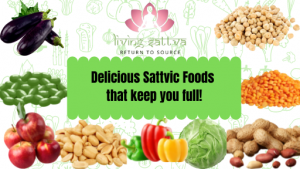
The term sattvic comes from sattva, meaning “clarity,” “purity,” and “balance.” In dietary practice, sattvic foods are simple, seasonal, fresh, and minimally processed. They support digestion, mindfulness, and energetic balance.
Instead of focusing on restriction or dieting, sattvic eating teaches:
- How to eat with awareness
- How food affects your body and mind
- How your daily choices influence your energy and mood
Sattvic diets encourage fruits, vegetables, whole grains, nuts, seeds, and legumes, and emphasize preparation with care and intention.
How Sattvic Eating Supports Natural Weight Balance
When food is chosen consciously and consumed mindfully, several positive shifts occur:
Better Digestion
Whole, fresh foods are easier to break down and absorb, improving nutrient uptake and energy. This helps maintain a steady metabolic rhythm instead of overwhelming the digestive system.
Reduced Cravings
Highly processed foods often trigger addictive eating patterns. Sattvic foods, rich in fiber and nutrients, help stabilize blood sugar and reduce cravings over time.
Emotional Regulation
Eating with awareness connects physical hunger with mental clarity, reducing emotional eating and making each meal a moment of nourishment, not a reaction to stress.
Sustainable Weight Balance
Instead of chasing quick fixes, sattvic eating helps your body settle into a natural equilibrium, supporting long-term balance rather than short-term loss.
Shifting Your Relationship With Food
If food does not make you fat, then what does a healthier relationship with food look like?
1. Eat with Presence
Put down your phone. Sit down. Chew consciously. Notice tastes, textures, and hunger cues. Your nervous system signals fullness more clearly when you’re present.
2. Choose Whole, Seasonal Ingredients
Fresh produce, whole grains, legumes, and simple preparations support digestion and nourishment more than packaged or artificial foods.
3. Slow Down
Eating slowly gives your body time to communicate satiety, reducing overeating and aiding digestion.
4. Notice Emotional Patterns
Ask yourself before eating:
- Am I physically hungry?
- Am I eating out of emotion or habit?
This simple awareness reduces unconscious snacking and emotional responses tied to food.
5. Incorporate Mindful Practices
Gentle breathwork before meals and sitting quietly after eating helps the nervous system and digestion harmonize.
A Final Thought
Food is not the enemy of your health or your weight. What matters is the harmony between your body, mind, and lifestyle. When food is eaten with awareness, supported by a calm nervous system, and aligned with well-rounded living patterns, it becomes nourishment rather than a source of imbalance.
If you’re seeking steady weight, more energy, and a peaceful relationship with eating, start not with restriction, but with awareness, presence, and intention.
Ready to Explore Conscious Eating Further?
Visit The Sattvic Method Company for more mindful nutrition resources, recipes, and guides designed to help you nourish your body and transform your relationship with food, one conscious choice at a time.