Why Your Nervous System Is a Sacred Text: The Vata Secret the Rishis Knew
Runtime: 20–25 minutes | Solo | No guest needed
Format: Intimate, teaching-style with storytelling
Target listener: Modern women seeking conscious living — anxious, exhausted, spiritually curious, but skeptical of generic wellness
Format: Intimate, teaching-style with storytelling
Target listener: Modern women seeking conscious living — anxious, exhausted, spiritually curious, but skeptical of generic wellness
WHY THIS TOPIC, WHY NOW
Spiritual growth in 2026 is moving from the “mind” to the “body.” Traditional meditation is being replaced or supplemented by Nervous System Regulation, practices that move the body out of fight-or-flight so that spiritual insight can actually land. Meanwhile, modern health discussions focus on isolated symptoms — digestive discomfort, insomnia, hormonal irregularities, chronic fatigue, anxiety — treating each as separate disorders. But both classical Ayurvedic wisdom and modern neurophysiology suggest many chronic imbalances trace back to dysregulation of the nervous system. Hounslow HeraldSalon CassiopeThis is the perfect bridge topic for The Sattvic Method Company: it’s trending in mainstream wellness, deeply rooted in Shastra, and maps directly onto your offerings (Ayurvedic cooking, pranayama, sattvic food, healing books).
EPISODE STRUCTURE & TALKING POINTS
Open with this provocation:
“The ancient Rishis didn’t have a word for ‘nervous system.’ But they described it with breathtaking precision — 5,000 years before neuroscience. And everything you’re feeling right now — the brain fog, the exhaustion, the sense that something is slightly ‘off’ even when life looks fine — they had a name for it. And they had a cure.”
“The ancient Rishis didn’t have a word for ‘nervous system.’ But they described it with breathtaking precision — 5,000 years before neuroscience. And everything you’re feeling right now — the brain fog, the exhaustion, the sense that something is slightly ‘off’ even when life looks fine — they had a name for it. And they had a cure.”
- Acknowledge what your listener is carrying right now: overstimulation, digital overload, decision fatigue
- Name the paradox: “You meditate. You eat clean. You try to be present. And still, something feels dysregulated. Why?”
- Promise: “Today I’m going to show you that your nervous system is not a medical problem. It’s a spiritual gateway. And the Shastras mapped it long before modern science did.”
📖 SEGMENT 1: THE SHASTRA FOUNDATION, Minutes 2:00–8:00
Title: “Vata — The Dosha of Your Nervous System”
Key Teaching Point #1 — Charaka Samhita on Vata: The Charaka Samhita (Sutrasthana 12.8) describes Vata as “the root of all movement in the body and mind.” It governs:
Key Teaching Point #2 — The Bhagavad Gita (Chapter 6, Verse 5–6): “Uddhared ātmanātmānaṃ nātmānam avasādayet” — “Let a person elevate themselves by the Self, and not degrade themselves.” Krishna is speaking to Arjuna who is in a complete nervous system collapse on the battlefield — shaking hands, weak knees, inability to think clearly. This is the Gita’s opening premise: you cannot act rightly, live rightly, or practice rightly when your nervous system is in crisis.
Key Teaching Point #1 — Charaka Samhita on Vata: The Charaka Samhita (Sutrasthana 12.8) describes Vata as “the root of all movement in the body and mind.” It governs:
- Prāna (life force)
- Nerve impulse transmission
- Mental clarity and fear response
- The rhythm of the breath
Key Teaching Point #2 — The Bhagavad Gita (Chapter 6, Verse 5–6): “Uddhared ātmanātmānaṃ nātmānam avasādayet” — “Let a person elevate themselves by the Self, and not degrade themselves.” Krishna is speaking to Arjuna who is in a complete nervous system collapse on the battlefield — shaking hands, weak knees, inability to think clearly. This is the Gita’s opening premise: you cannot act rightly, live rightly, or practice rightly when your nervous system is in crisis.
- Connect this: The entire Gita is essentially a manual for nervous system regulation from the inside out
- Point for listeners: “Your spiritual practice doesn’t start at the meditation cushion. It starts the moment you decide to stop letting your Vata run the show.”
Key Teaching Point #3 — Taittiriya Upanishad & the Pancha Kosha:
The Taittiriya Upanishad describes five sheaths of the human being — Annamaya, Pranamaya, Manomaya, Vijnanamaya, Anandamaya. The Pranamaya Kosha (the energy/breath body) is the direct interface between the physical body and the mind. This is the nervous system in Vedantic terms.
🌿 SEGMENT 2: THE MODERN CRISIS TRANSLATED — Minutes 8:00–13:00
Title: “What the Rishis Would Say About 2026”
Bhagavad Gita Chapter 17, verses 8-9 classifies food by the three Gunas. Sattvic foods — “āyuḥ-sattva-balārogya-sukha-prīti-vivardhanāḥ” — those that increase life, purity, strength, health, joy, and cheerfulness. Rajasic and Tamasic foods literally increase nervous system dysregulation at a Guna level. “This is why sattvic eating isn’t a diet trend. It is nervous system medicine from the Gita itself.”
🔥 SEGMENT 3: THE PRACTICE — Minutes 13:00–20:00
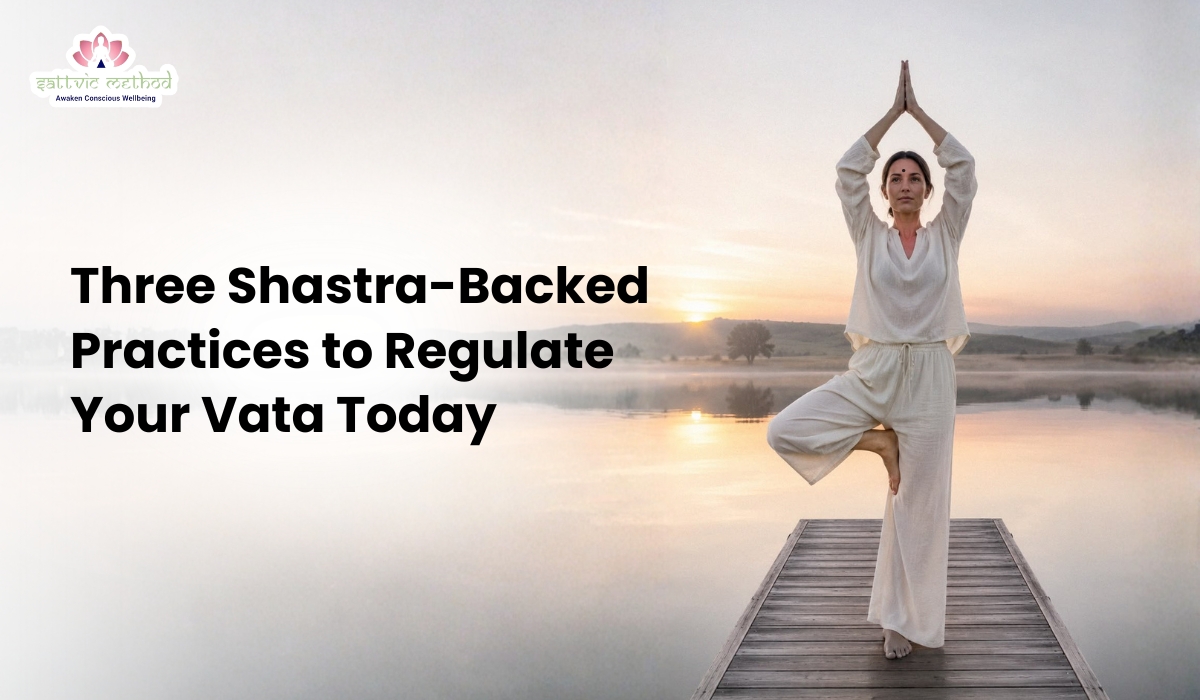
Title: “Three Shastra-Backed Practices to Regulate Your Vata Today”
Practice 1 — Nadi Shodhana Pranayama (Alternate Nostril Breathing)
The Taittiriya Upanishad describes five sheaths of the human being — Annamaya, Pranamaya, Manomaya, Vijnanamaya, Anandamaya. The Pranamaya Kosha (the energy/breath body) is the direct interface between the physical body and the mind. This is the nervous system in Vedantic terms.
- “You can’t reach the deeper koshas — the Vijnanamaya (wisdom) or Anandamaya (bliss) — if the Pranamaya Kosha is on fire. The Rishis knew you had to calm the breath body first.”
🌿 SEGMENT 2: THE MODERN CRISIS TRANSLATED — Minutes 8:00–13:00
Title: “What the Rishis Would Say About 2026”
- Spiritual practitioners are turning to Nervous System Regulation ,practices like the “physiological sigh,” cold water splashing, and humming are becoming essential daily rituals — because you cannot reach higher states of consciousness if your body feels unsafe. Hounslow Herald
- Your angle: “Interesting — the modern wellness world is rediscovering what Ayurveda prescribed millennia ago: rhythmic touch (Abhyanga), structured breath (Pranayama), warm foods, darkness and silence, routine (Dinacharya).”
- Waking before sunrise = synchronizing your nervous system to cosmic rhythm
- Oil massage (Abhyanga) before bathing = warm herbal oils and rhythmic massage techniques signal safety to the nervous system, shifting from sympathetic dominance toward parasympathetic regulation — allowing digestion to strengthen, hormones to recalibrate, and sleep to deepen Salon Cassiope
- Eating warm, cooked, sattvic foods = pacifying Vata through the element of Earth and Water
Bhagavad Gita Chapter 17, verses 8-9 classifies food by the three Gunas. Sattvic foods — “āyuḥ-sattva-balārogya-sukha-prīti-vivardhanāḥ” — those that increase life, purity, strength, health, joy, and cheerfulness. Rajasic and Tamasic foods literally increase nervous system dysregulation at a Guna level. “This is why sattvic eating isn’t a diet trend. It is nervous system medicine from the Gita itself.”
🔥 SEGMENT 3: THE PRACTICE — Minutes 13:00–20:00
Title: “Three Shastra-Backed Practices to Regulate Your Vata Today”
Practice 1 — Nadi Shodhana Pranayama (Alternate Nostril Breathing)
- Hatha Yoga Pradipika (Ch. 2) and Shiva Samhita both prescribe Nadi Shodhana for purifying the nadis — the subtle nerve channels
- “This is not a breathing exercise. This is a rewiring of your subtle nervous system. The Rishis called the channels Ida and Pingala — cooling and heating. Modern science calls them parasympathetic and sympathetic. Same truth, different vocabulary.”
- Give the listener a 4-count practice they can do right now as they listen
- Manusmriti and various Upanishads prescribe Mauna as essential spiritual hygiene
- Digital disconnection has become a spiritual status symbol in 2026 — a “Tech-Free Sabbath” is viewed as a way to reclaim the brain and call back fragmented energy. Hounslow Herald
- “The ancient concept of Mauna is not about silence for silence’s sake. It is about withdrawing Vata’s most depleting function — speech and mental chatter — so Prana can rebuild. Start with 30 minutes in the morning. No phone. No scroll. No noise.”
- Reference the Sattvic Method Company’s Ayurvedic cooking workshop
- Manusmriti 3.227: “Anna is Brahman” — food is the Divine. When you cook sattvically, with presence and intention, you are transmitting Sattva into the nervous system at a cellular level
- “Every meal is a ceremony. The Rishis didn’t separate cooking from prayer. When you add turmeric with awareness, when you make kanji with love — you are performing a healing ritual. This is what our ancestors knew.”
- Reframe the listener’s exhaustion not as failure, but as information
- Bring it back to the Gita: “Yoga is not about becoming someone else. Yoga is union — samatvam yoga uchyate — equanimity is Yoga (Gita 2.48). Equanimity IS a regulated nervous system.”
- Close with a blessing in the Adi Shaiva tradition (since TSMC is rooted in the Adi Shaiva lineage): invoke Shiva as the Mahayogi — the one whose stillness holds all movement
- Call to Action: “If this resonated, our Pranayama workshop every second Sunday is exactly where we go deeper. Link in the bio. And if you want to start with your kitchen — our Sattvic cooking books are the gentlest first step.”